Français
Articles
Sporting Holidays in Thailand – All You Need to Know About the Climate and Its Variations
Whenever South East Asia is mentioned, the initial image that comes to mind, particularly in the case of Thailand, is of powerful blazing sunshine coupled with intense humidity. One of the first things travellers recall about coming out of the airport in Bangkok is the sensation of being physically struck by the intense tropical heat that typifies the region. Welcome to Thailand!
There are, however, big differences between provinces and big seasonal changes. So it is essential to know the detailed characteristics of the Thai climate before leaving home, so that you can plan your trip to best advantage. Rain and sunshine vary in intensity and duration according to the region and the season. Some sites are only worth visiting at certain times of year, some activities differ substantially with the season, some regions should be avoided at certain times of year. For tourists interested in both sports and nature, it is all the more important to know the particular characteristics of the climate in each different part of the country, so as to be able to organize activities effectively. What time of year is good for exploring the jungle-covered mountains around Chiang Mai or when is the best time to go diving on Koh Phi Phi or Koh Tao? This sort of information is indispensable.
The specific characteristics of the climate
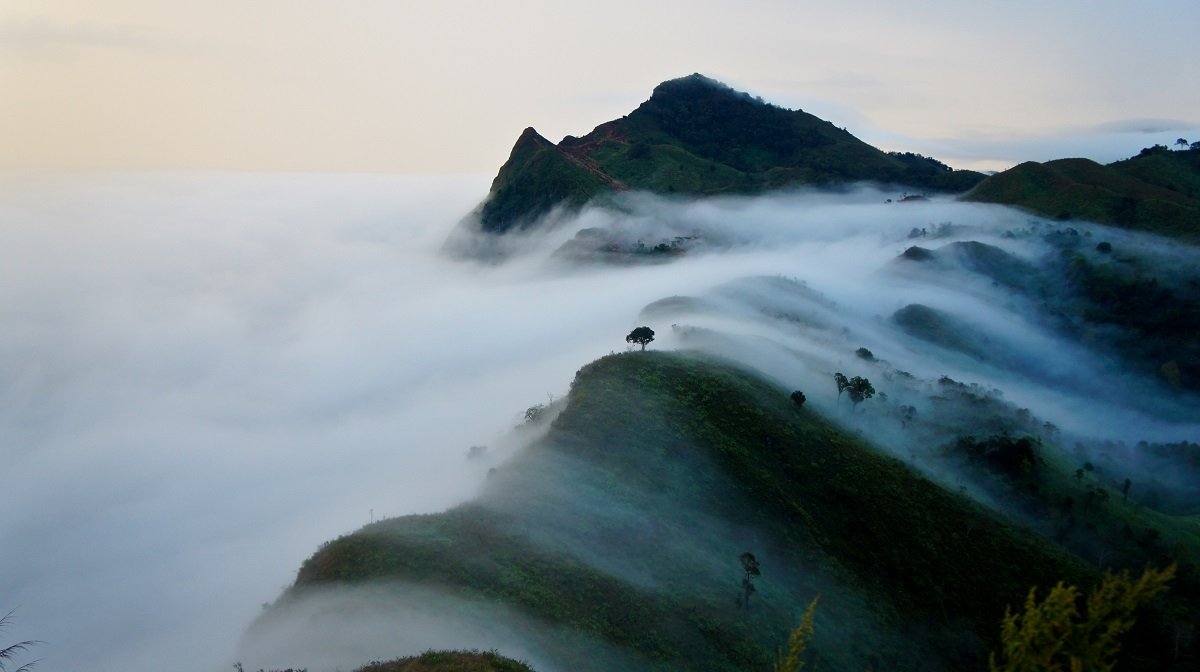
There are only three seasons in Thailand. In most of the country the rainy or monsoon season runs from June to September. It is followed by the cold season, from October onward, when the rains stop and the temperature begins to drop. This goes on until the end of February. Then, from March on, the hot season takes over; the temperature rises, sometimes as high as 40˚ Celsius, and this lasts until the rainy season takes over again in May.
The monsoons are a defining feature of the Thai climate and play an essential role in both the natural cycle and the life of man. The frequent downpours fill the empty water table after months without rain. They irrigate the vegetation and the fields and thereby regulate the economic activities of the people whose lives depend on agriculture. The cold season is all the more appreciated by everybody because it comes immediately after the monsoons; nature is now burgeoning and temperatures more temperate. The hot season is more complex in its effects; nature dries out, deprived of water, and the temperature soars to its highest point in the year.
But these three seasons are not the same – and do not last for the same length of time – in the south of Thailand, in the islands, in Bangkok and its environs, in the Isan region or in the northern mountains near the Golden Triangle. During the rainy season a heavy downpour can last an hour… or a whole day. During the hot season, with its cloudless skies, temperatures can soar and make any kind of activity impossible. In winter, on the other hand, the weather can get much colder than anticipated, making adaptive equipment a necessity. So it is important to know the specific characteristics of the climate in each part of the country.
The climate in Bangkok and central Thailand
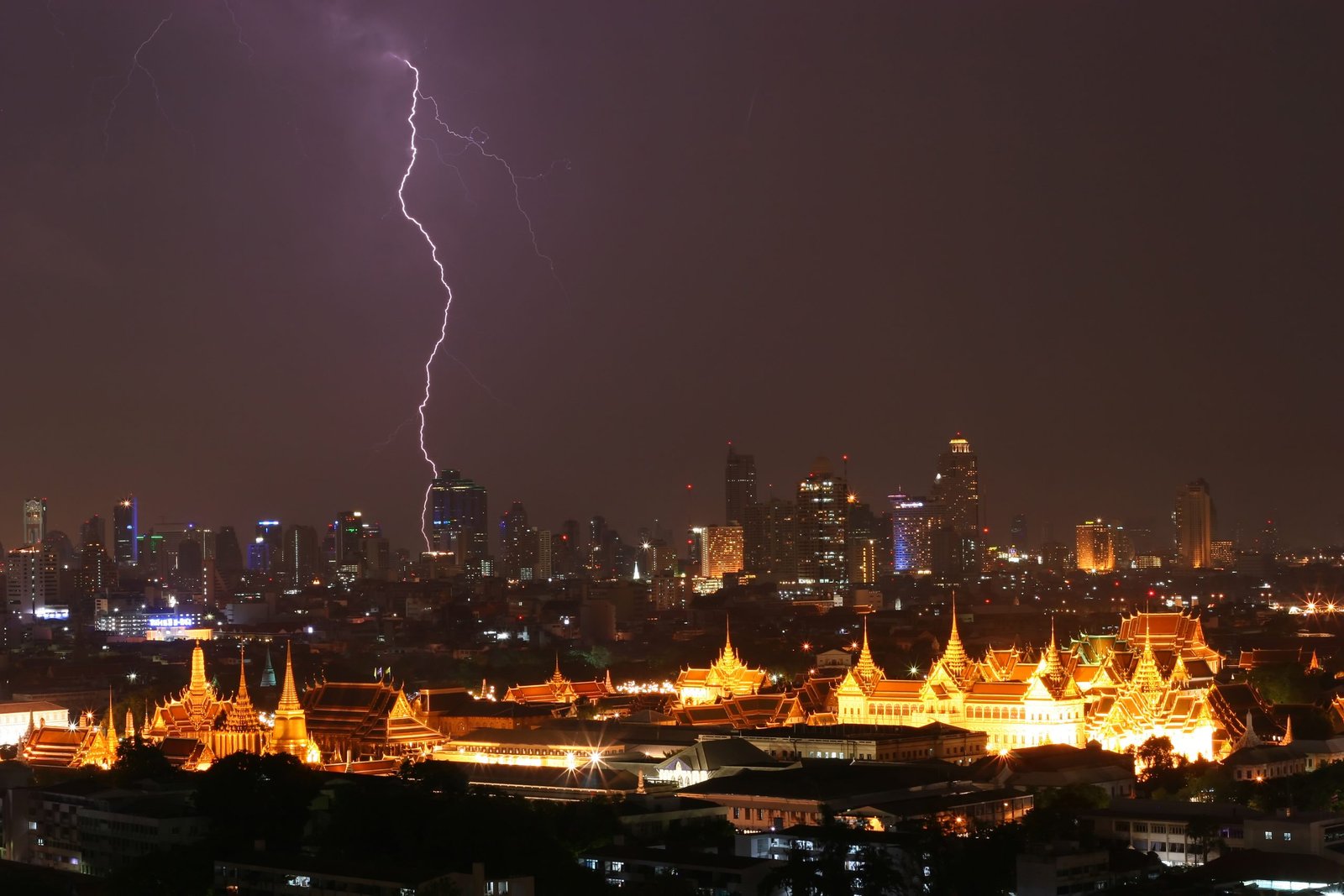
Bangkok enjoys a typical South East Asian tropical climate, with three seasons. The monsoons begin in June and last for approximately 4 to 5 months. There follows the cold season, which goes on until the end of February. Last but not least comes the hot season, which lingers until halfway through the year, when the rains start up again. The same climate can be found throughout central Thailand, from Korat to Kanchanaburi, and from Chonburi in the south to Phitsanulok in the north. In this vast region of plains, temperatures are over 30˚ Celsius for almost the whole of the year. In the hot season they can even go as high as 40˚.
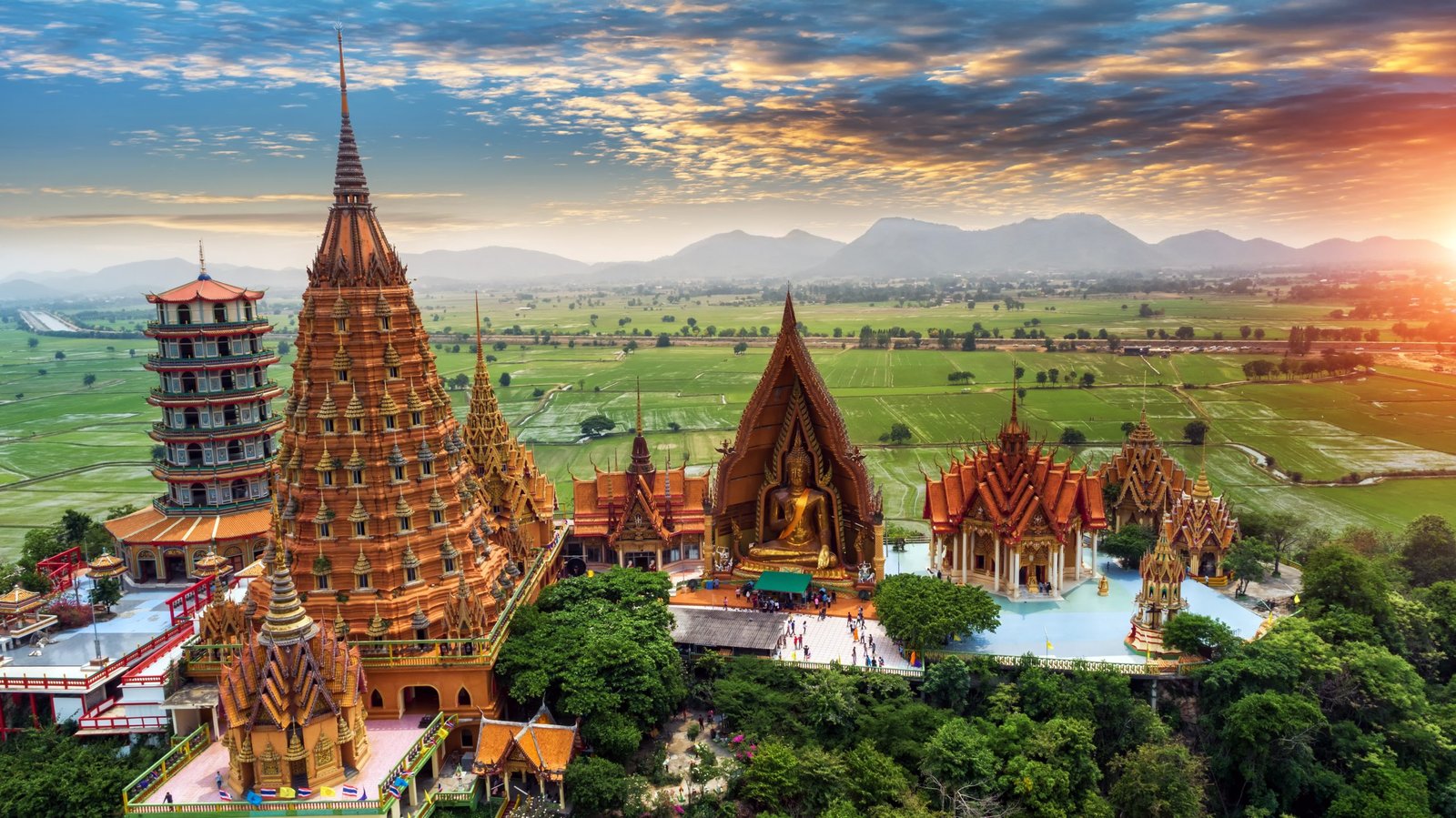
The best time for visiting the capital Bangkok, Kanchanaburi and the river Kwai, Pattaya and its beaches or the royal city of Ayuthaya is therefore the cold season. From October to May, but particularly in December and January, temperatures in the region fall to an acceptable 20 to 30˚, and there is no rain. Tourists with little or no experience of a tropical climate can therefore enjoy a less humid atmosphere and fine blue skies, and can visit temples, historic sites and places of natural beauty without getting hot and sweaty. It is indeed the only period when you can walk around Bangkok without real discomfort. Logically, this makes it the high season for tourism, and accommodation and activities have to be booked in advance.
It is entirely possible to visit Bangkok and central Thailand during the rainy season. Unlike certain parts of the south where it can rain more or less non-stop for two or three months on end during the monsoons, in central Thailand periods of rain are shorter. Normally it rains for an hour or less towards the end of the day or during the night, especially in June or October, which are less rainy months. This amount of rain is no obstacle to sightseeing and other open-air activities. One of the advantages of the monsoon season is that it is on average much less hot than the preceding months, because the showers refresh the atmosphere. On the other hand, though there is less frequent rain, the downpours can be torrential, causing floods and traffic problems.
March, April and May – the hot season – are months to avoid in central Thailand. After six months without rain, temperatures reach heatwave levels (40 degrees in the shade). It is almost impossible to spend time outdoors; at best, you can go out early in the morning or in the late evening. Sporting activities are out of the question, all the more so because the air is polluted by ash (deriving from slash-and-burn farming) which comes down from the north. The only way to pass the time in Bangkok is to take refuge in one of the air-conditioned shopping malls or to become a ‘night bird’ and enjoy the capital’s famous nightlife. The one and only real reason to come in the hot season is to take part in the Thai New Year (Songkran) festivities in April. The water battles that take place throughout the country are the only moment when you can actually enjoy the scorching heat.
The climate in the South of Thailand and the islands
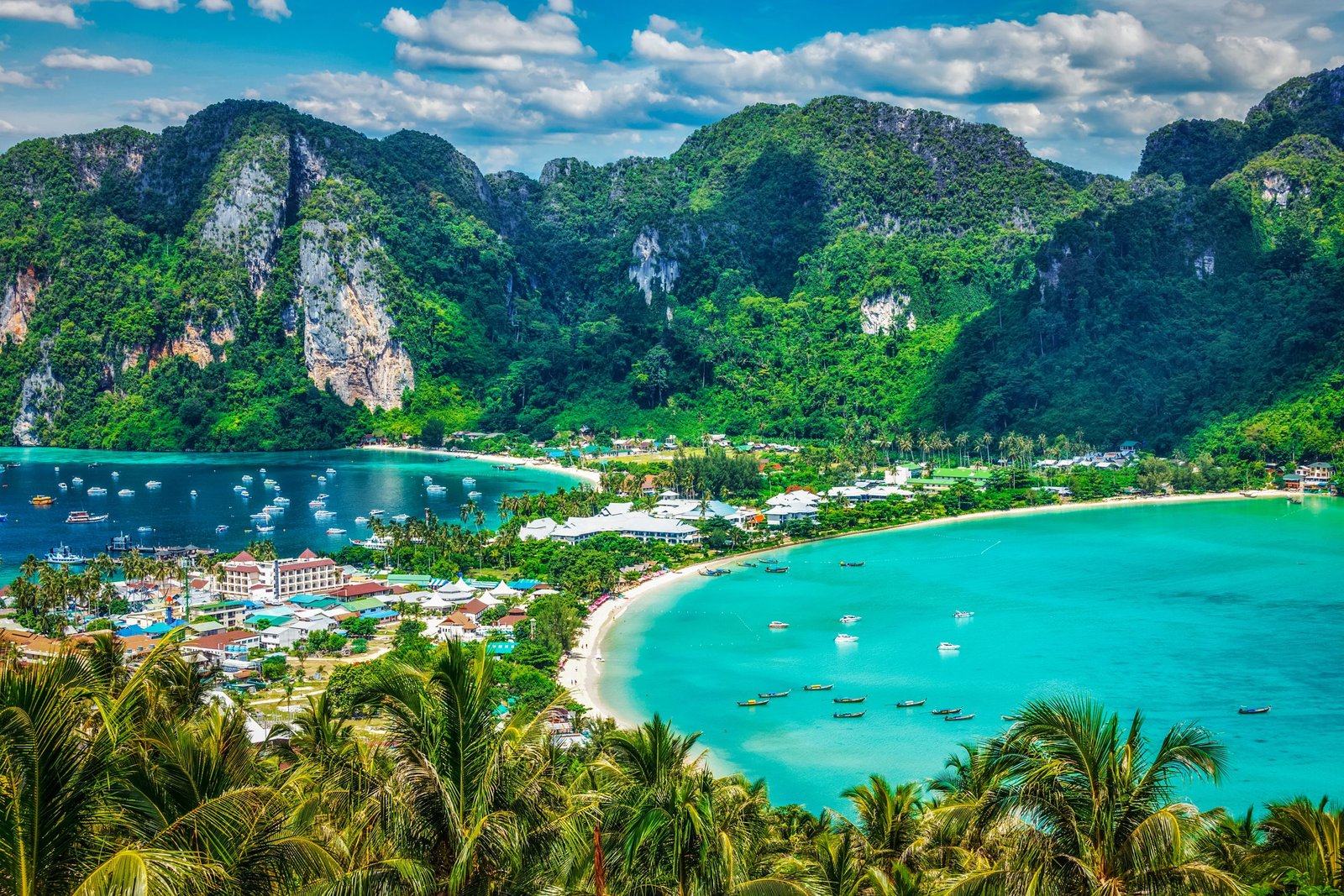
The climate in the South of Thailand varies greatly from one side of the country to the other because of the monsoons. The west coast, facing the Andaman Sea (Similan and Surin islands, Phuket, PhangNga, Krabi, Koh Phi Phi, Koh Lanta and Koh Lipe) receives the South-West monsoon, which starts in May, bringing currents of warm wet air from the Indian Ocean. It lasts six months (May to October), during which time rainfall increases in quantity and duration, reaching its heights in the months of August, September and October. The monsoon season on the Eastern side of the country is entirely different in character. The Gulf of Thailand is not affected by the South-West monsoon, which slips away up to the centre and north of the country. Instead, the provinces of Surat Thani and Nakorn Sri Thammarat and the islands of Koh Samui, Koh Pha-Ngan and Koh Tao are affected by the Northeast monsoon, which comes down from China and brings rain and storms in October and November. Unlike the South-West monsoon, which lasts six months, the Northeast monsoon only stays in southern Thailand for two months. October and November there are very wet; then the weather turns fine again in the course of December.
It is therefore very important to take account of these differences when planning your holidays. It is not a good idea to go to the islands in the Andaman Sea during the July and August school holidays. The best time for those areas is during the Thai ‘high season’ from November to March-April. In contrast, you can enjoy the islands in the Gulf of Thailand (with the exception of Koh Chang and Koh Kood, which lie close to Cambodia and are, by some oddity, subject to the South-West monsoon) at almost any time of the year – you only need to avoid the months of October and November.
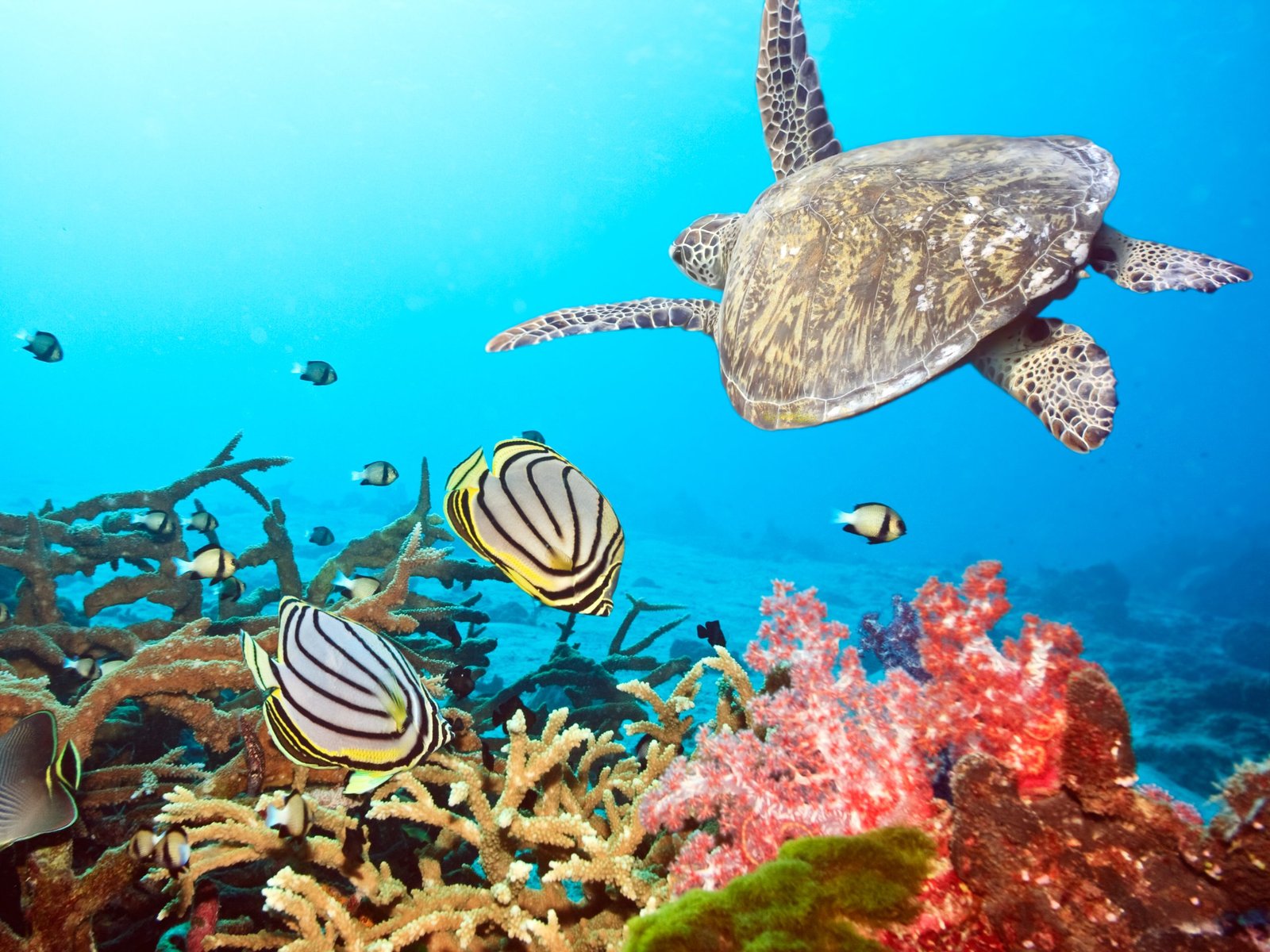
The climate and the particular characteristics of the two monsoons also have an impact on open-air activities. The water temperature is not at issue – it never goes below 25 degrees Celsius. But the rains falling on the Andaman Sea do greatly reduce visibility for diving and snorkelling. When the rain lets up, you can still enjoy both activities, but on average visibility is cut back to 10 metres. When the monsoon is over, the dominant strong Northwesterly winds ensure that the sea stays rough and diving tricky. The best season for water sports in this area only starts in January and goes on for four months, until the rains return. The islands on the eastern side of the country enjoy good conditions for a greater part of the year. Diving and snorkelling (i.e. using flippers, mask and breathing tube) are possible for 8 months of the year, from February to October, and the visibility is good. Only the monsoon months – November to January) are not advisable.
Away from the islands and the coastal towns both South-West and the Northeast monsoons influence the climate in the south of Thailand. The rainy season is correspondingly long – it stretches over eight whole months! In these areas the vegetation is magnificent, because it stays thick, green, wild and fresh throughout the year. Khao Sok, a superb National Park situated between Phuket and Surat Thani, and Bang Lang National Park near Betong in Yala province on the Malaysian border, are marvelous places to visit in the first four months of the year, when the rains have died down.
The climate in the Chiang Mai region
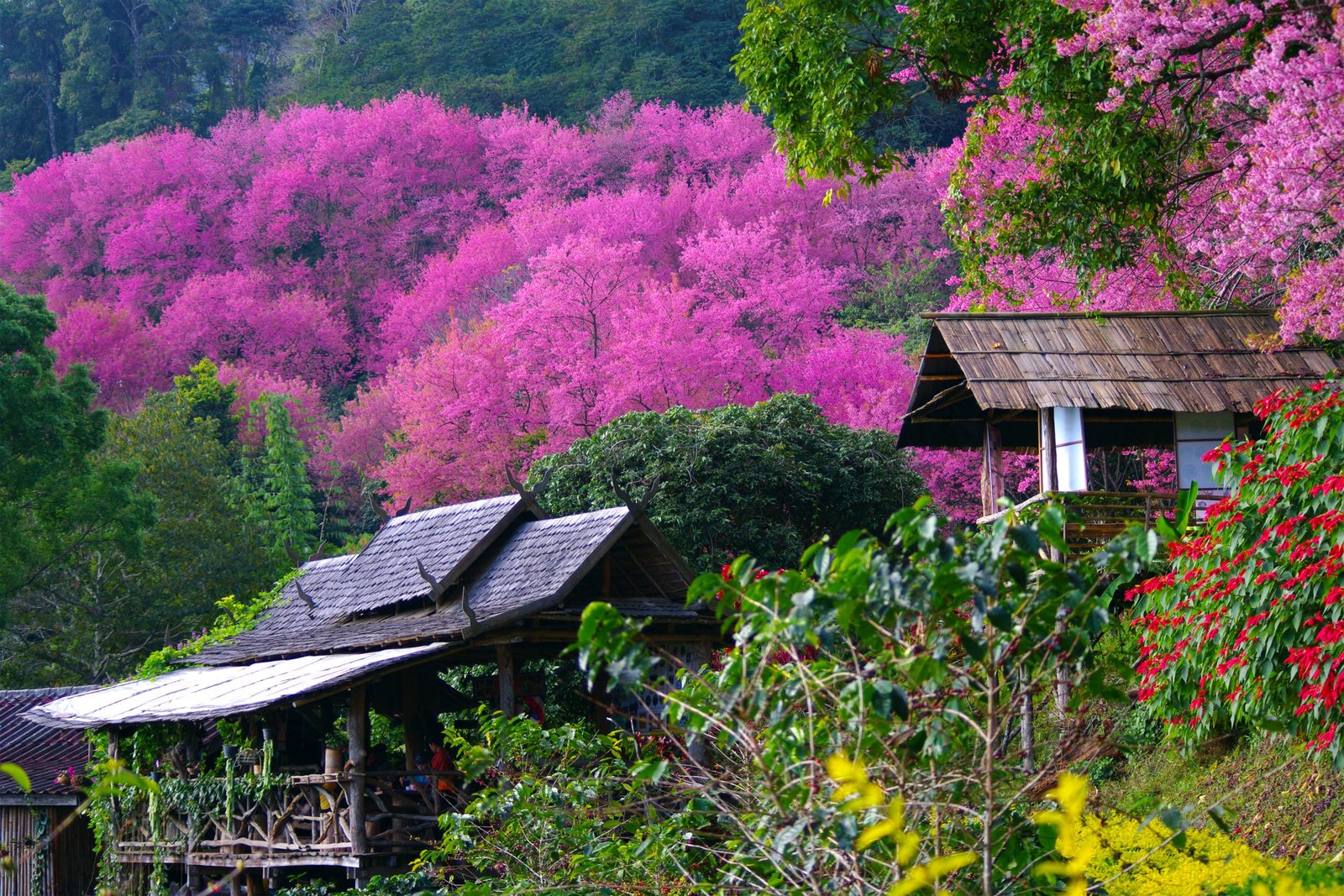
The north of Thailand begins a little to the south of Phitsanulok about 300 kilometres from Bangkok. It is hemmed in by Burma to the north-west and Laos to the northeast. Where these three countries meet lies the famous Golden Triangle, and thereabouts lies a mountainous area, which contains the highest peaks in the country. This geographical situation explains the particular characteristics of the climate in the area. It is there that the temperature drops the lowest in the cold season, whilst the hot season is very dry and the long rainy season is governed by the South-West monsoon.
Every year, from November on, crowds of both Thai and overseas tourists hasten to the North in the Chiang Mai area to enjoy its unique climate. At the end of the rainy season temperatures drop progressively lower and the region enjoys exceptionally mild weather, particularly from mid-November to mid-February. In the city the thermometer can fall as low as 20˚ in the middle of the day and below 15 degrees during the night. Temperatures fall even further up in the mountains. It is not unusual to see the thermometer go down to 10˚ at an altitude of 1000 metres. The lowest ever temperature in Thailand (minus 5˚) was recorded on the summit of Doi Inthanon, at an altitude of 2500 metres,
The cold season is followed by the hot season; temperatures start to go up from the end of February. They rise rapidly: by the end of March it is already over 30˚ Celsius. But it is in April that exceptionally high temperatures get recorded and the mercury regularly climbs above 40˚. This season is the least popular with both locals and visitors. Apart from scorching heat both atmosphere and vegetation are very dry after 4 or 5 months without a drop of rain. It is also the season when the peasant farmers and mountain tribes burn the fields and undergrowth, polluting the air with ash.
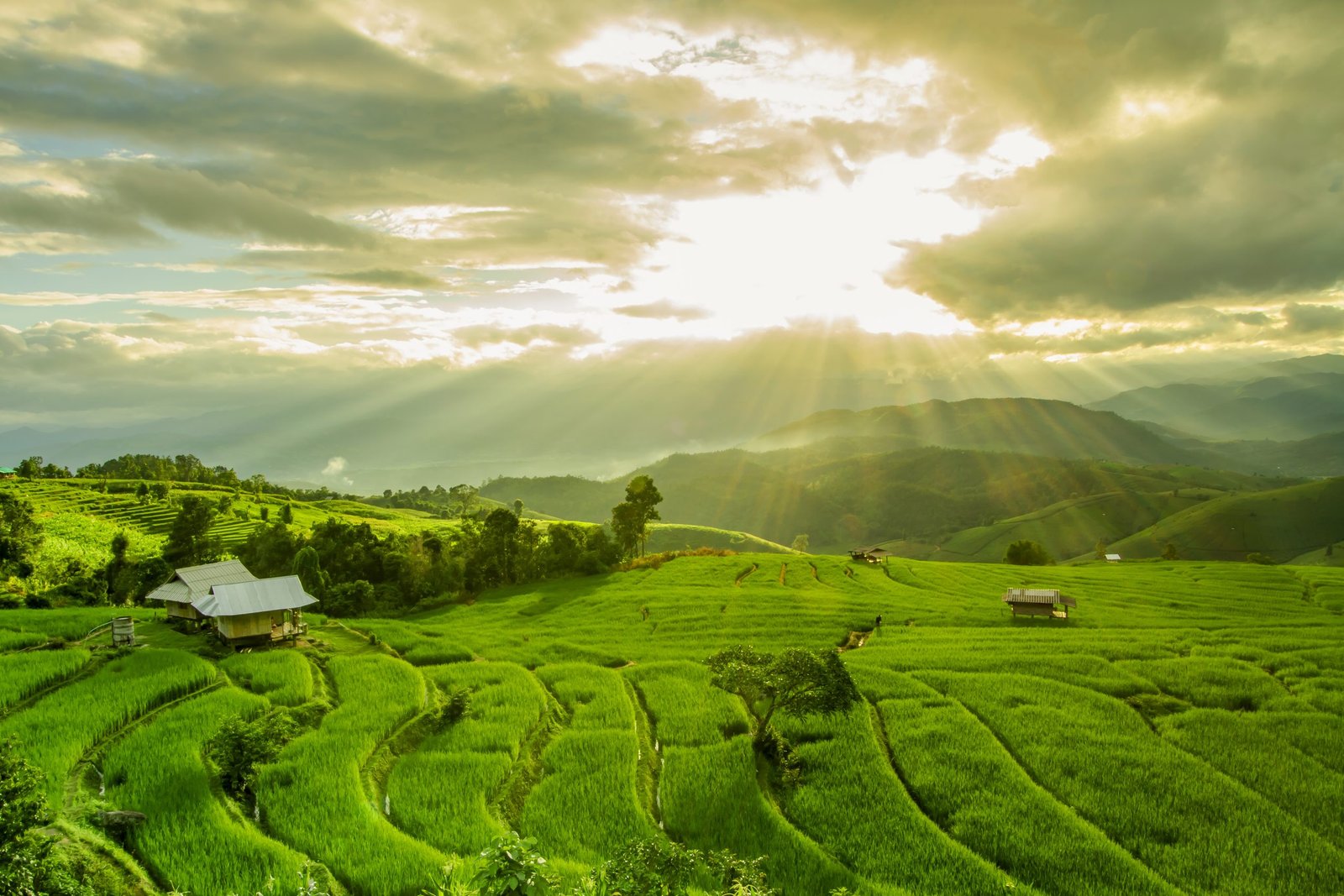
The hot season – the least pleasant season in the north – comes to an end in May when the first rainy spells begin. Many people find the change a relief. The quality of the air improves, temperatures fall significantly lower and nature comes alive again after six months without a drop of rain. The monsoon season lasts 6 months, from May to October, but it lacks the intensity of its southern counterpart. On average it rains only half as much – usually for less than an hour in the late afternoon or during the night. So life in the north is very pleasant at this season; it does not get nearly as hot as in the centre or the south, and the moderate daily rainfall lets life follow a normal rhythm.
It is fairly obvious that the best season for enjoying what the north of Thailand has to offer is the cold season, from November to February. Whether hiking or practising open-air sports such as cycling, mountain biking, trail running and foot racing, you can be sure the activity will take place in a magnificent natural setting at its best after the rainy season and you can rely on ideal temperatures. In the mountains this is the season when the views are at their finest, thanks to cloudless blue skies. We can also recommend you to come in the rainy season, as, for most of the time, sporting activities are not inconvenienced by the brief showers that occur at the day’s end. This is the season when the natural world is at its most beautiful. The jungle is at its most luxuriant and humid, showing off every shade of green in Nature’s palette, and the spectacle of terraced rice paddies filled with water or already in flower is unparalleled. The only time of year when we would advise you not to come is the hot season, from the end of March to the end of May. Indeed, we shut the agency at that point every year, because conditions for hiking or practising sports are bad, not to say downright dangerous; it is too hot, too dry and too polluted.
The climate in the Isan region
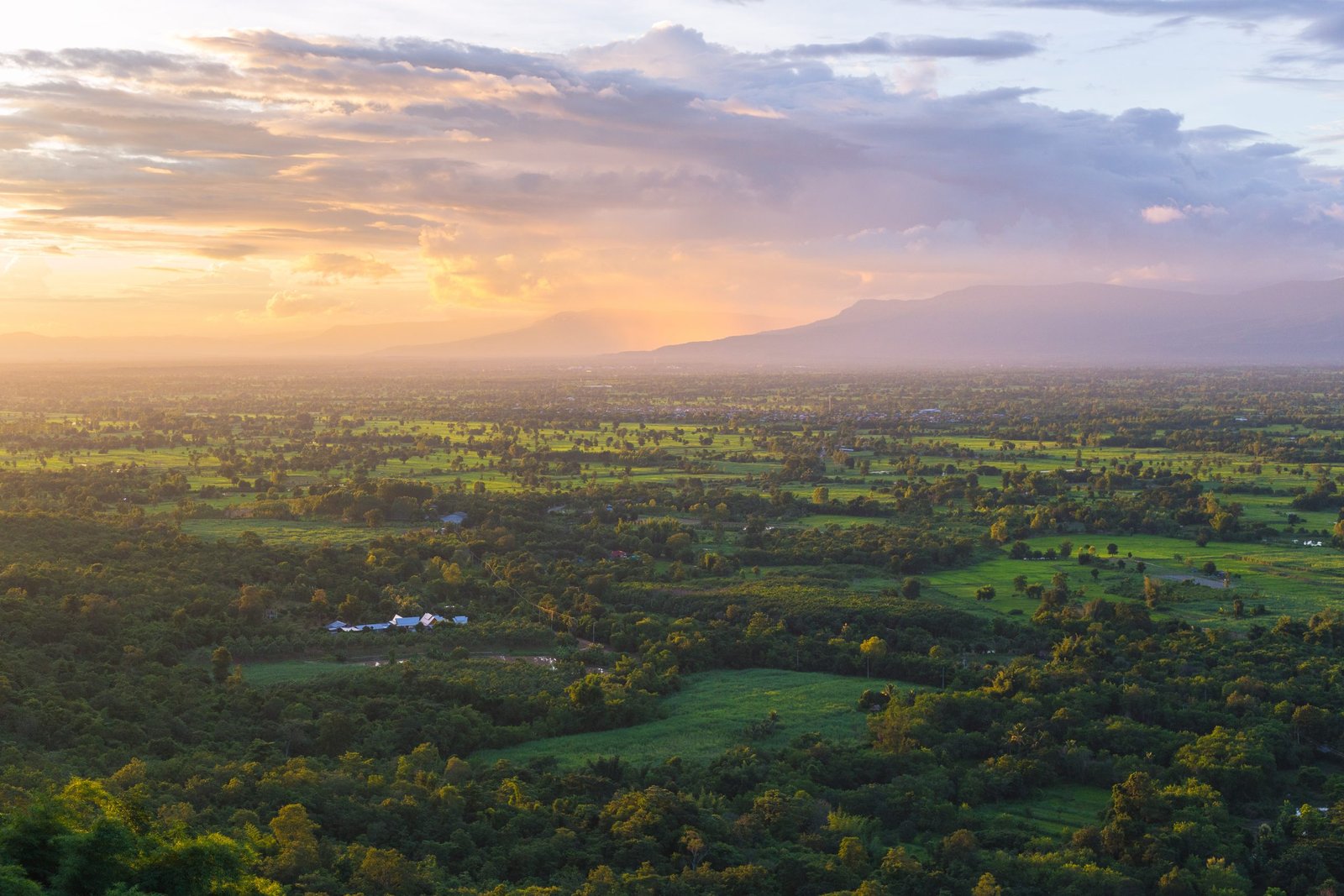
The North East of Thailand, known as Isan, is the biggest region in the country, but also the poorest and the least developed. It is an area primarily dependent on family farming, and the younger generations often prefer to go off and find other work elsewhere. It is a fairly flat region, its plains broken up here and there by a few hills or small mountains. Very few tourists go there, and those who do are mostly interested in the many national parks, the best known of which are Khao Yai and Phu Kradeung.
Isan has a climate similar to that of the North, with a rainy season deriving from the South-West monsoon. The season differs in intensity because the relative paucity of mountains and wind leads to much higher temperatures. The rainy season is just as long – running from May to September – but starts earlier. The cold season is reduced to two months (December and January) and the scorching hot season lasts for at least three full months (February to April). The two-month window of opportunity for enjoying hiking in the national parks (December and January) is thus quite small.
To arrange a holiday in Thailand effectively you must take into account the particular climatic characteristics specific to each of the country’s regions. At the very least you should avoid those periods of time when a given province will predictably be at its worst. Do not go to the North in April and May, avoid Kho Phi Phi, Phuket and Krabi from May to October, and forget about diving off Koh Tao or Koh Samui in November and December. Thanks to the climatic differences between the regions it is always possible to identify the best spots and the most appropriate activities for the dates at which you are free. But do bear in mind that we are talking about broad tendencies and that the weather can always turn out quite different from what is predicted. To get more information and weekly weather forecasts, consult the official website of the Thai meteorological service (www.tmd.go.th/en/), but do not forget that the weather can change rapidly here. It is sometimes hard to know what it will be like tomorrow!